The Benefits of Barge Transportation
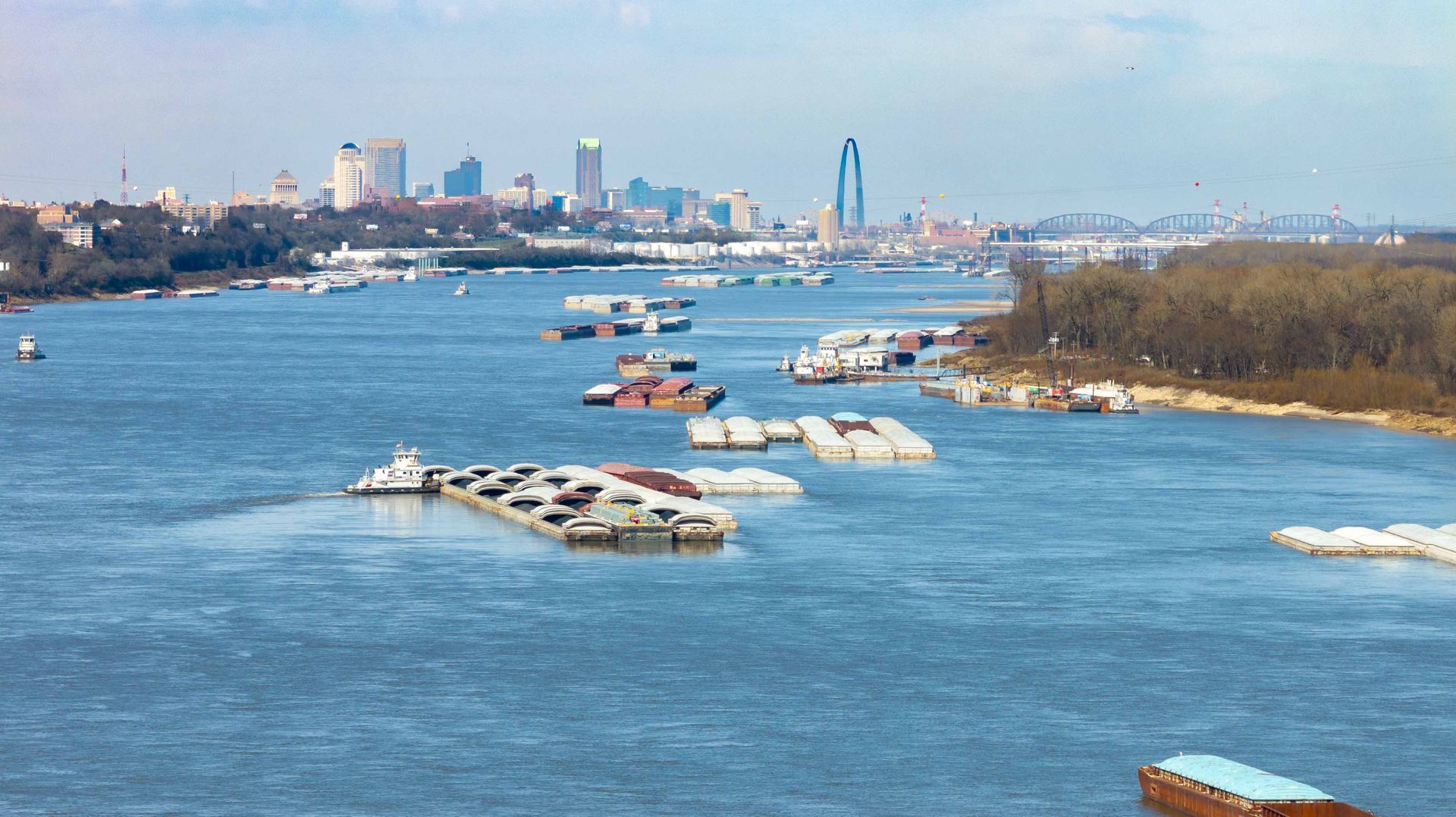
The Benefits of Barge Transportation. When it comes to logistics, barges are an often-overlooked mode of transportation. While truck and rail transportation is commonly used and more visible, there’s plenty of evidence to support the benefits of transporting goods across waterways instead of land. Ranging from financial to environmental, there’s a long list of ways barge transportation is a better option.
Barges Transport Important Resources
Because the nation’s primary inland waterway system reaches from America’s heartland to ports responsible for exporting, barges are commonly used to transport grain, soybeans, and corn. In fact, this method is responsible for transporting about 60% of these crops to be sent to other countries — that’s a combined value of about $17 billion. This directly helps to boost the US economy. Barges are also used to move shipments of coal and fuel throughout the waterway system, helping to provide power sources to businesses and homes everywhere.
Barges Contribute to the Economy
The water transportation industry contributes a total impact of $33.8 billion to the US economy and creates over 300,000 jobs, moving more than 760 million tons of vital commodities annually. The US tugboat, towboat, and barge industry has a direct impact on 38 states, but all 50 can see economic benefits in one way or another. Louisiana is the state that benefits most, followed by Texas, Kentucky, Florida, and New York — which combined account for 59% of employment in the industry. Rising populations mean increased food production, and that translates into future growth and economic impact over the next 40 years.

Barges Reduce Congestion
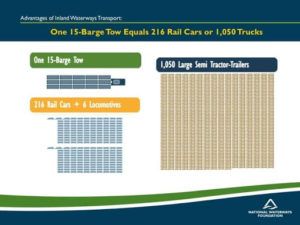
Consider this: A single grain barge can carry 12,500 tons of grain while a railroad hopper car can only hold 100 tons of grain and an 18-wheel semi-truck holds just 15 tons. Not only does this reduce the number of vehicles regularly traveling the roadways, but it can also mitigate the risk of costly infrastructure repairs. If barge transportation was moved to highways, “[a]pproximately 2 inches of asphalt would have to be added to the pavement of 118,688 lane-miles of rural interstate.” Imagine the maintenance cost that would incur.
Barges Are Cost-Efficient
As the costs of rail and truck freight transportation increase year after year, barge transportation remains a cost-efficient option for shipping. Studies have shown that barge traffic saves around $12 billion in transportations costs and a single barge requires only a gallon of fuel to move one ton of cargo 647 miles . (Freight train cars get 477 miles and trucks get only 145 miles and of transportation per cargo ton, per mile.) These cost-saving benefits are passed along to everyone who’s part of the supply chain when barges are used for shipping and transportation.
Barges Are Environmentally Friendly
Less fuel usage and increased cargo volume capabilities translate into fewer emissions that pollute the air. Waterway systems also mean that urban development isn’t required to create or repair infrastructure, unlike rail or truck transportation. Barges don’t contribute to noise pollution and have minimal impact on surrounding nature. Waterways are generally built away from areas with higher population density, which also reduces impact.
Barges Are Safer
As of 2017, barge-related accidents and fatalities are significantly lower than those attributed to rail and trucking transportation. For every one injury caused by barge accident, 80 injuries occur due to rail accidents and 824 are injured in trucking accidents. For each barge-related fatality, there are 21 rail fatalities and 79 trucking deaths. In addition, fuel “spills of more than 1,000 gallons are very low for barges, at 2.12 gallons per-million-ton-miles, rail at 5.95 and trucks at 6.04.” Using barge transportation can drastically improve working conditions and cut down on the risk and liability for the organizations that choose this option.
Although barge transportation has been utilized since well before the Industrial Revolution, it often doesn’t get the credit it deserves for being such an integral part of logistics in the US. However, the world is starting to see that it can offer a long list of benefits over rail and truck freight shipping and the industry is projected to be worth $140 billion by 2026.
Whether you’ve had years of barge transport experience or you’re just starting to reap the benefits of transporting goods using this method, we can provide the marine supplies you need to keep your barge fleet in top shape. We are committed to delivering a high-quality product along with prompt, friendly and professional customer service. We take great pride in our ability to provide our customers with products they need, when they need it and at prices that are very reasonable.
The post The Benefits of Barge Transportation appeared first on Archway Marine.